
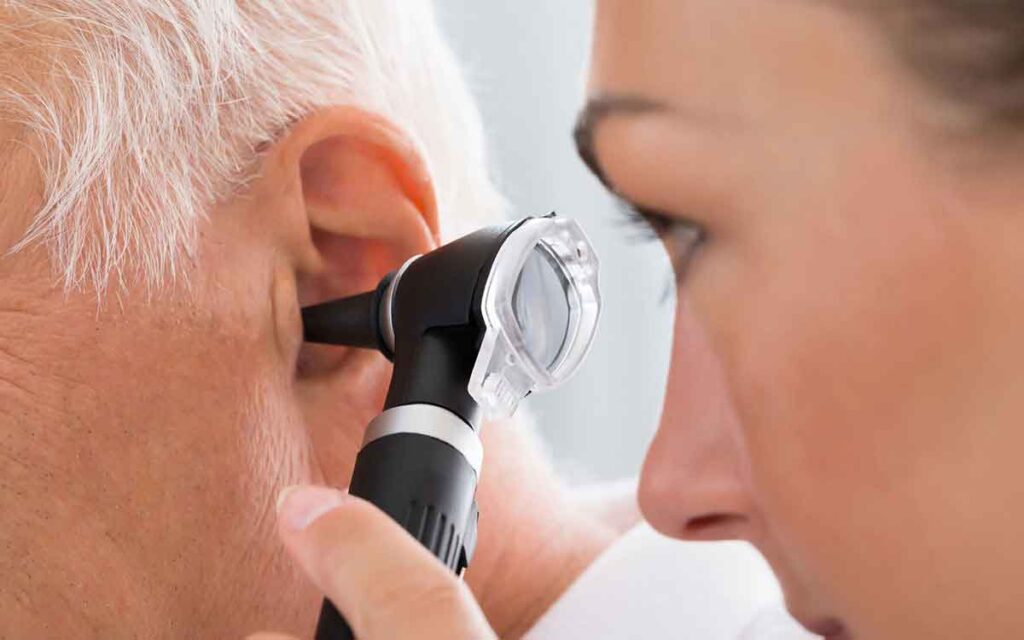
Auditory decline frequently advances as an incremental process, which often results in the condition being missed during its initial onset. Numerous individuals compensate subconsciously by increasing media volume, asking for clarification, or withdrawing from loud settings.
Yet, the prompt identification of hearing loss signs is necessary for maintaining quality of life.
Primary Signs of Developing Hearing Impairment
If you identify any of these indicators, consider scheduling an audiological evaluation to establish a baseline.
- Reduced clarity during social interactions within high-noise areas.
- Frequent instances of requesting clarification during conversation.
- The perception of muffled or slurred speech where sounds lack definition.
- Requiring increased decibel settings for media than is typical.
- Reduced sensitivity to high-frequency acoustic signals like children’s speech or doorbells.
- The presence of tinnitus, characterized by ringing or buzzing in the ears.
- Feeling cognitively fatigued after social interactions, resulting from the strain of auditory processing.
- Withdrawing from social gatherings as dialogue has become stressful.
These early signs of hearing loss can affect either ear and may come and go at first. Since the auditory cortex adjusts to input shifts, subconscious adjustments often remain hidden until clinical hearing loss is evident.
Statistical Overview of Global Auditory Health
The World Health Organization reports that hearing rehabilitation requirements will impact 700 million people by 2050. Other relevant statistics involve:
- By 2050, approximately 2.5 billion people are expected to experience some degree of hearing loss.
- More than five percent of the global community (roughly 430 million people) requires rehabilitation to manage significant hearing loss.
- In excess of 1 billion young adults face the threat of irreversible hearing loss resulting from hazardous acoustic habits.
- Among those over the age of sixty, over 25% have disabling hearing loss.
The Value of Early Hearing Loss Detection
Neglecting auditory decline can affect systemic well-being and physiological status.
Clinical evidence shows a documented link between ignored hearing loss and mental health risks, including isolation and depression.
Early intervention provides better long-term prognosis and diverse therapeutic options.
A professional assessment identifies if hearing shifts are caused by aging, earwax impaction, or other systemic issues.
Specific hearing variations remain temporary and resolve with appropriate medical care.
Conversely, timely adoption of hearing devices or protective strategies may mitigate further decline.
When to See a Hearing Specialist
A professional screening is warranted under the following circumstances:
- Auditory symptoms persist for more than several weeks.
- Auditory challenges interfere with occupational performance and social life.
- You experience sudden hearing loss, dizziness, or persistent tinnitus (which requires immediate attention).
Assessments for hearing are noninvasive procedures, offering essential information regarding your physiological hearing status.
Reach out to our audiology team if you are interested in scheduling a baseline hearing evaluation.
Frequently Asked Questions: Recognizing Auditory Decline
Q: Is hearing loss always age-related?
A: No, while aging is a factor, hearing loss can be precipitated by acoustic trauma, infection, or systemic health issues.
Q: Can auditory impairment be clinically reversed?
Answer: Certain etiologies, such as earwax impaction or localized infection, are treatable. While other forms are irreversible, they can usually be managed with professional treatment or hearing technology.
Question: What is the recommended frequency for hearing screenings?
Answer: Clinical guidelines suggest a baseline evaluation by the age of 50, or earlier if symptoms of hearing loss are noticed.