
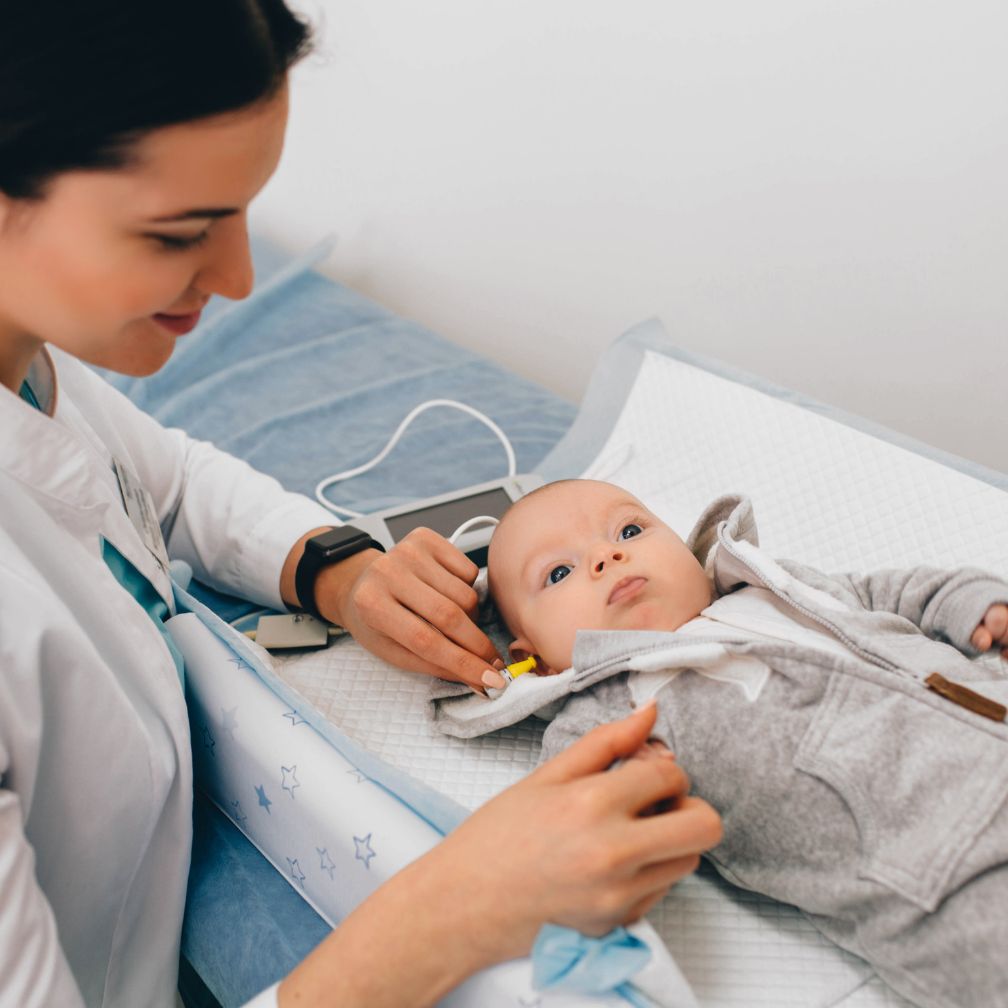
For first-time parents, learning that their baby shows hearing challenges can feel deeply shocking and distressing. However, the encouraging reality remains: through prompt screening and early care, infants with auditory challenges will achieve remarkable achievements. Remarkably, these children can construct spoken language, expressiveness, and meaningful bonds throughout their community, ensuring a bright, enriched future!
Utilizing wearable hearing aids and state-of-the-art cochlear implants offers two effective treatment methods for helping babies with hearing impairment. Within this detailed breakdown, we assess their primary mechanics and detail how to pick the ideal device for your child.
Demystifying Hearing Deficits in Newborns
Congenital auditory impairment in infants can emerge as a result of specific root causes, such as:
- Specific genetic mutations (even within bloodlines having zero history of impairment)
- Primary maternal congenital infections like cytomegalovirus (CMV) or rubella infection
- Severe delivery difficulties, like acute oxygen deprivation or preterm birth
- Particular intensive care medications applied in newborn intensive care facilities
The most important step? Early diagnosis. Owing to these factors, infants delivered in United States hospitals complete hearing screens before discharge from the hospital. Dedicated pediatric hearing clinicians consistently enforce the standardized “1-3-6” intervention timeline:
- Preliminary auditory screening conducted within 30 days post-birth
- Thorough clinical diagnosis established within 90 days of birth
- Therapeutic intervention (employing wearable technology or developmental therapy) initiated prior to 6 months of life
Meeting these procedural steps provides infants their ideal path toward flourishing speech, language mastery, and neurological health. If you require additional direction regarding these testing procedures, your personal pediatrician stands eager to help!
Pediatric Hearing Aids for Young Babies
For young patients experiencing mild to severe hearing loss, hearing aids are often the primary therapeutic intervention. These small, external hearing devices boost overall volume levels, enabling babies to hear spoken dialogue and environmental sounds much more clearly.
Modern pediatric hearing aids remain:
- Fully cleared and safe for young babies merely weeks past delivery
- Constructed using pliable, soft ergonomic molds that adapt as the baby matures
- Equipped with secure battery housing closures and child-focused protective features
- Expertly programmed by a pediatric audiologist to match your child’s hearing profile
During physical development, these hearing instruments require routine adjustments to maintain physical comfort and functional efficacy.
Understanding Cochlear Implantation for Babies
When an infant presents with severe to profound sensorineural hearing loss and doesn’t benefit enough from hearing aids, clinical teams frequently recommend a cochlear implant. Differing fundamentally from conventional amplification tools, cochlear implants:
- Call for precise surgical installation within the inner ear structures
- Bypass damaged parts of the inner ear
- Convert surrounding audio into precise electrical signals that stimulate hearing nerve pathways directly
Precision-implanted cochlear devices remain:
- Granted regulatory approval by the FDA for children as young as 9 to 12 months
- Highly successful when paired with early speech intervention and consistent family involvement
- Prescribed solely after rigorous joint evaluations by a certified audiologist and otolaryngologist
That multi-step journey involves high-resolution imaging, objective hearing assessments, and setting realistic expectations for future communicative success.
Contrasting Hearing Aids with Cochlear Implants
- Mild to severe hearing challenges suit Hearing Aids; Severe to profound hearing impairment calls for Cochlear Implants
- Non-Invasive wearable design: Hearing Aids; Surgical insertion required: Cochlear Implants
- Traditional acoustic amplification: Hearing Aids; Direct electrical signal generation: Cochlear Implants
- Treatment starts in newborn infancy: Hearing Aids; Implantation starts at 9-12 months: Cochlear Implants
Concluding Guidance on Pediatric Hearing Technology
If your newborn faces a confirmed hearing impairment diagnosis, you can rely on excellent technological options and dedicated expert support. Thanks to collaboration with dedicated pediatric audiologists, numerous children grow to master language development completely comparable to their healthy peers.
No matter if your infant proves better suited for conventional hearing aids or advanced cochlear implants, acting swiftly unlocks lifelong developmental success.
Do you still have lingering questions regarding your infant’s auditory condition? Contact our clinical team today for a full evaluation and personalized care plan.